
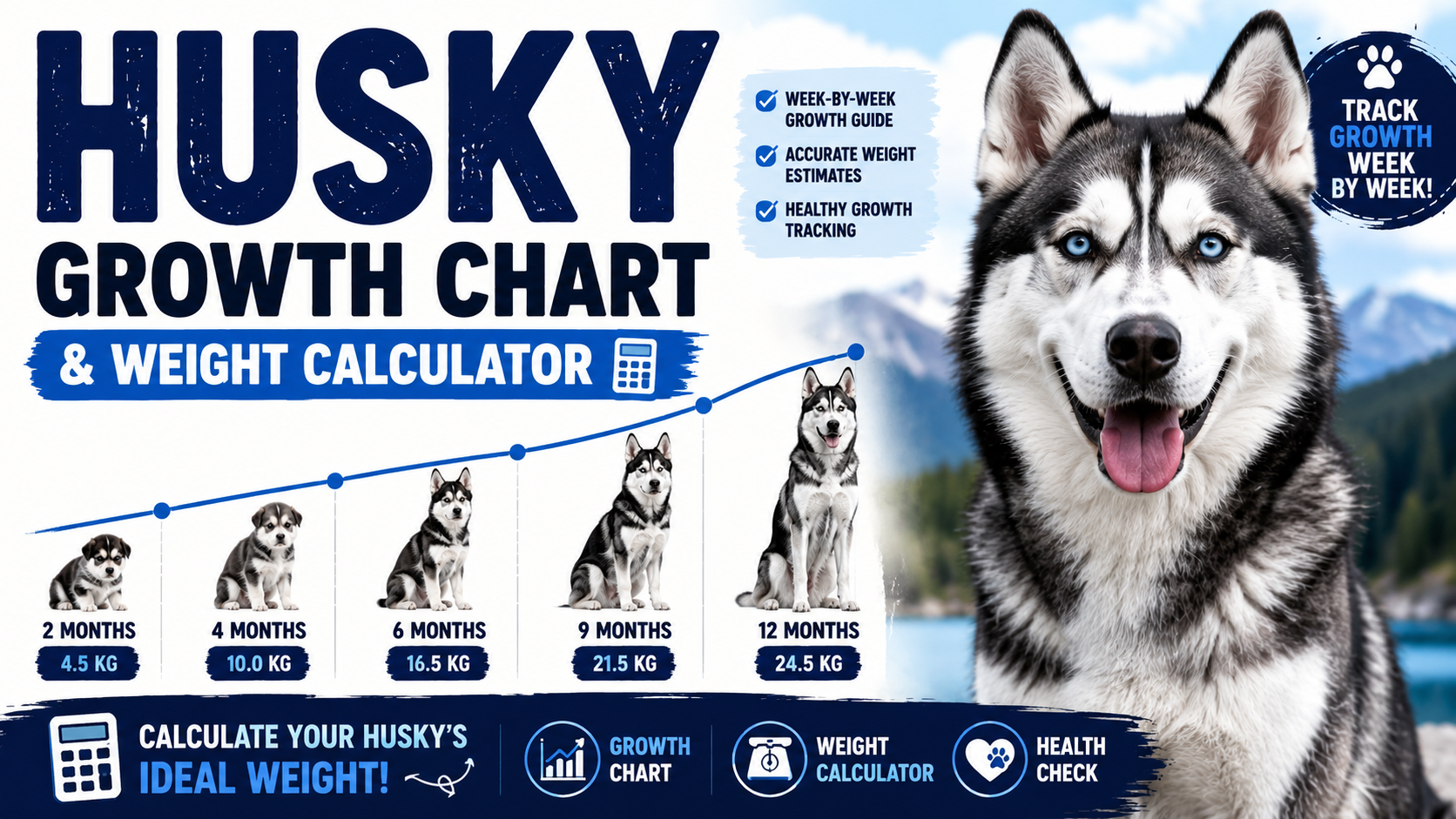
Siberian Husky Growth & Weight Calculator
Monitor your puppy’s physical milestones and check if they are tracking on target for an adult Husky.
Siberian Husky Standard Benchmark Ranges
| Age Milestone | Male Weight Range | Female Weight Range |
|---|---|---|
| 2 Months | 10 – 15 lbs (4.5 – 6.8 kg) | 8 – 12 lbs (3.6 – 5.4 kg) |
| 4 Months | 22 – 32 lbs (10.0 – 14.5 kg) | 18 – 26 lbs (8.2 – 11.8 kg) |
| 6 Months | 35 – 45 lbs (15.9 – 20.4 kg) | 30 – 40 lbs (13.6 – 18.1 kg) |
| 9 Months | 40 – 55 lbs (18.1 – 24.9 kg) | 33 – 45 lbs (15.0 – 20.4 kg) |
| 12 Months | 45 – 60 lbs (20.4 – 27.2 kg) | 35 – 50 lbs (15.9 – 22.7 kg) |
| Adult (18+ Mo) | 45 – 60 lbs (20.4 – 27.2 kg) | 35 – 50 lbs (15.9 – 22.7 kg) |
To effectively utilize this calculator, monitor your puppy weight during current age in weeks. Input current weight and breed to calculate the estimate for your adult weight using the specific formula for growth stages.
Track age, weight, and predict adult size accurately. Note, this estimate is never the actual adult weight, as genetics, diet, and exercise for every dog weight calculator mean results vary based on individual factors daily.
Table of Contents
Male Siberian Husky Growth Chart
Male Huskies weigh 45 60 pounds and stand 21 23.5 inches tall at full adult size. Tracking development is vital as puppies mature into large dogs using standard growth chart metrics effectively daily health range.
Genetics play the biggest role in adult weight ranges. Consult veterinarian guidelines to monitor proper nutrition and exercise, ensuring healthy conditions for your growing pet without excessive risks impacting their overall body condition.
Female Siberian Husky Growth Chart
Female Siberian Huskies experience growth phases differing from males. When tracking puppies using the average chart, owners easily estimate adult size. This care ensures growing dogs maintain healthy weight and properly develop good overall health.
Observe height in inches and range for each age. By reported weight at different ages, you create visual tools. Your Siberian Husky will mature correctly, so keep tracking to support your companions well-being every day.
When Do Huskies Stop Growing?
Huskies finish developing skeletal frames once growth plates close, typically 12 to 18 Months. Individual rates vary, so sex hormones will impact final height, weight, plus overall physical progression toward complete adulthood, crucial for well-being.
Male dogs often grow larger than females, matching distinct breed standards like the American Kennel Club. The timing of spaying or neutering alters hormonal balance, which can influence growth, surpassing any typical estimate you predict.
Factors That Affect Husky Growth
Unexpectedly, genetics dictate the fundamental rate of skeletal development, but environment remains crucial. I observe that nutrition and caloric density significantly shift the path of maturity, far beyond what simple charts might suggest clearly now.
Active exercise levels impact metabolism and hormones, often misunderstood by many owners. Furthermore, early neutering or untreated parasites and underlying stress create invisible roadblocks to physical health, altering the overall trajectory for your growing dog.
How To Weigh Your Husky Puppy
Achieving critical development phases hinges upon consistent data habits. Utilizing a digital scale on a steady surface allows accurate tracking of your puppy, ensuring every growth routine every week remains focused on optimal biological health.
Minimize anxiety during the process by remaining calm while using treats for cooperation. Whether you measure in pounds or ounces, every record added to the chart provides metrics essential for monitoring canine health wellness standards.
Husky Puppy Feeding Guide
Fueling your canine companion requires understanding their rapid metabolic shifts during initial developmental stages. High-quality protein sources are essential foundations, supporting dense muscle architecture and vibrant coat vitality while ensuring sustained, balanced daily energy requirements.
Avoid free-feeding practices because regulating portion sizes prevents obesity, which severely impacts developing joint health. Instead, strictly monitor consumption schedules, gradually adjusting meal ratios as your maturing pup approaches the crucial twelve-month nutritional transition phase.
How To Tell If Your Husky Is Overweight Or Underweight
Palpating the ribcage defines body condition, which is crucial for identifying health conditions or joint problems. Routine regular veterinary check-ups mitigate illness or parasites. A healthy dog maintains appropriate weight, easily preventing overfeeding and gain.
Monitor adult size patterns closely. While exercise builds muscle, watch for infections or imbalances. Consistent tracking maintains an ideal weight. Trust your intuition, because spayed or neutered status can significantly influence the canine maturity timeline.
Siberian Husky Health Concerns Related To Growth
Monitoring skeletal development requires balance; rapid growth often stresses joint plates, inviting orthopedic issues. Improper nutrition, especially calcium imbalance or excess phosphorus, disrupts bone density, impacting the healthy stature and fluid gait of maturing dogs.
Regarding metabolic health, preventing obesity remains vital for longevity. Excessive weight puts undue stress on frames, while ignoring vitamin levels hampers structure. Always prioritize controlled exercise to prevent future hip dysplasia in your active pet.
Final Thoughts
As an owner, observing your beautiful, working dog develop is vital. Forget the rigid calculator; thinking about specific temperament matters more. Trust your intuition over charts while you monitor their health, ensuring a happy lifestyle.
This energetic, furryfriend offers incredibleendurance and strikingappearance. Whether pullingsled or just providing companionship, these companions remain big on personality. Always prioritize your unique animal’s needs, embracing every moment of the journey.
How Big Will My Husky Get?
Regarding medium-sized breed development, full adult size remains variable. Husky owners often observe female dogs weigh 35 to 50 pounds and stand 22 inches tall when fully mature after 2 years pass, grown dog weight.
When Do Huskies Stop Growing?
Unlike giant breeds that mature slowly, medium category canines finish developing quite quickly. Most Huskies fill out by 18-24 months, though structural maturity often takes 2-3 years to finalize, surpassing typical large breeds standard timelines.
How Accurate Is The Puppy Weight Calculator?
Digital tools provide mere estimates, not absolute biological guarantees for your pet’s development. While algorithms track general trends, individual growth varies significantly based on genetics, nutrition, and daily activity level within your specific household environment.
Is My Husky Puppy The Right Weight For Their Age?
Observing your Chukchi descendant involves more than simple observation. Beyond the popular wolf-like looks, assessing your puppyhood pet requires understanding current growth patterns to ensure your friendly companion maintains the best possible physical development rate.
How Much Should I Feed My Husky Puppy?
Feeding active pups requires personalized feeding recommendations rather than generic charts. During the 6-12 month stage, offer 2-3 meals per day. Always adjust portions based on food packaging guidelines, ensuring fresh water remains accessible daily.
Related Articles:
German Shorthaired Pointer Puppy Growth Chart & Weight Calculator
Great Pyrenees Growth Chart & Weight Calculator
Great Dane Growth Chart And Weight Calculator For Puppies