
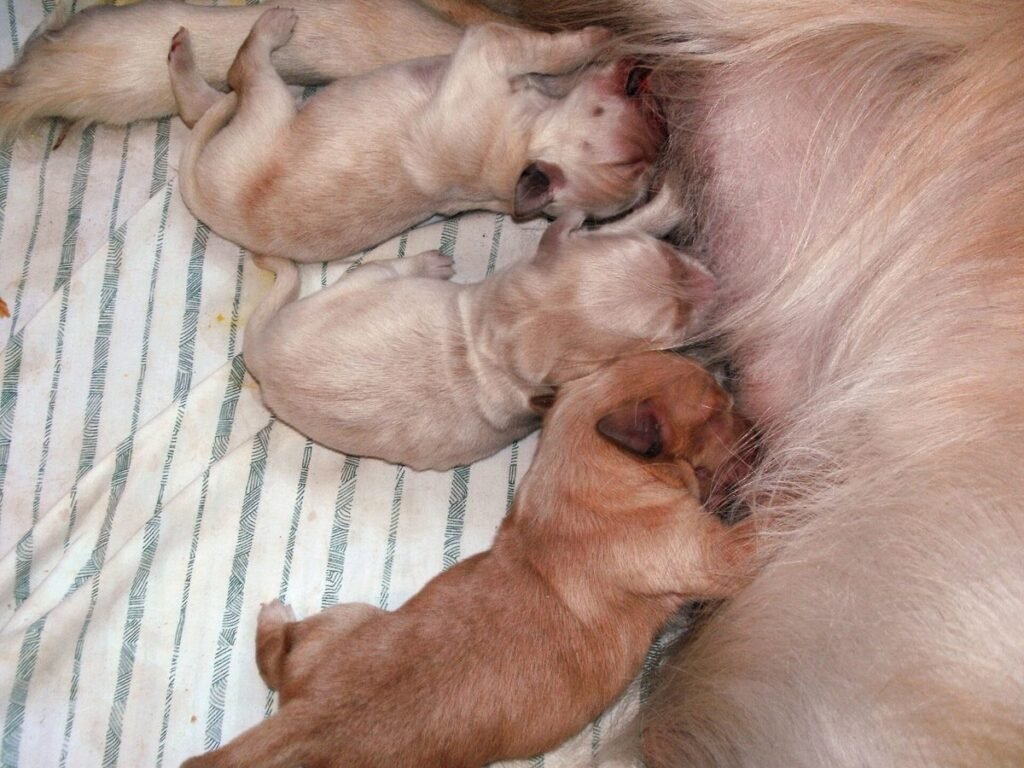
Watching a puppy grow is one of the great pleasures of dog ownership — and one of the fastest-moving. In a single year, a puppy goes from a blind, helpless newborn who cannot regulate their own body temperature to a young dog who looks, and mostly acts, like an adult. That journey happens in recognisable stages, and knowing what each stage involves helps you feed, train and care for your puppy with confidence instead of guesswork.
This guide walks through every major stage from birth to adulthood: what is happening physically, what behaviours to expect, and what your puppy needs from you at each point. Growth timing varies by breed size — small dogs race through these stages while giant breeds take nearly two years — so treat the ages as typical landmarks rather than a timetable your puppy must obey. Our puppy development guide goes deeper on behaviour and socialisation milestones.
Stage 1: The Newborn Stage (Birth to 2 Weeks)
Newborn puppies are born with their eyes and ear canals closed. They cannot walk properly, cannot keep themselves warm, and spend almost all of their time sleeping and feeding. Their world is scent, warmth and their mother’s care. Healthy puppies gain weight steadily during this stage, often doubling their birth weight within roughly the first week to ten days.
For owners, this is a stage of watching rather than handling. The mother does nearly everything, including stimulating the puppies to urinate and defecate. Your job is to keep the whelping area warm, clean and quiet, and to make sure every puppy is feeding and gaining. A puppy who is not gaining, cries constantly or is pushed away from the teat needs veterinary attention quickly — at this age, small problems become serious fast.
Stage 2: The Transitional Stage (2 to 4 Weeks)
Around two weeks, eyes begin to open — first revealing blue-grey eyes that focus poorly — and ear canals open shortly after. Puppies start to hear, to wobble upright, and to attempt their first unsteady steps. Teeth begin to push through, tails wag, and littermates become playmates rather than just warm bodies to sleep against.
Weight gain remains rapid. Puppies also begin to lap liquids toward the end of this stage, which is the first step toward weaning. Gentle, brief handling by familiar people can begin, helping puppies get used to human touch while still spending almost all their time with their mother and siblings.
Stage 3: The Socialisation Stage (4 to 12 Weeks)
This is arguably the most important stage of a dog’s life. Puppies learn how to be dogs: playing with littermates teaches bite inhibition, body language and patience, while the weaning process — usually complete by seven to eight weeks — teaches independence. Puppies are also unusually open to new experiences during much of this window. Sounds, surfaces, people and gentle handling encountered now are far more likely to be accepted calmly for life.
Physically, growth is fast and visible. Puppies move onto solid food, their baby teeth are fully in, and coordination improves daily. Most puppies leave for their new homes at eight weeks or later. New owners should continue careful socialisation: meeting friendly people, hearing household sounds, riding in the car and experiencing the world at the puppy’s pace, while keeping paws off the ground in public places until vaccinations allow otherwise. Our puppy care guide covers those first weeks at home in practical detail.
Stage 4: The Juvenile Stage (3 to 6 Months)
By three months, most puppies are gaining weight at their fastest rate and eating with enthusiasm. Baby teeth begin to fall out around three to four months, replaced by adult teeth over the following weeks — expect chewing, sore gums and the occasional tooth found on the floor. Training started now pays off enormously: puppies are eager, food-motivated and learning constantly, even when they pretend otherwise.
This is also when puppies start to look less like round babies and more like miniature, slightly unproportioned dogs. Legs lengthen, ears may look oversized, and growth spurts can make a puppy look lean one week and solid the next. Feeding a measured growth diet, weighing every week or two and tracking progress on a puppy growth chart helps you keep growth steady rather than fast.
Stage 5: The Adolescent Stage (6 to 12 Months)
Adolescence arrives with hormones, confidence and selective hearing. Most puppies reach sexual maturity somewhere in this window, though the timing varies widely. Growth slows noticeably: small breeds may be at or near adult weight by six to eight months, medium breeds approach it toward the end of the year, and large breeds keep adding height first and muscle later.
Behaviour can feel like a step backwards. A puppy who came when called at four months may discover at eight months that the world is more interesting than you are. This is normal, temporary and best handled with patient, consistent training rather than stricter punishment. Physically, the growth plates — the soft areas at the ends of long bones where new bone forms — are gradually closing during this stage, which is why vets often advise against repetitive high-impact exercise and long forced runs for young dogs, especially large breeds.
Stage 6: Young Adulthood (12 to 24 Months)
By twelve months, most small and medium dogs look like adults, though many are still maturing mentally. Large breeds continue to fill out, gaining chest width and muscle well past their first birthday. Giant breeds such as Great Danes and Mastiffs are the slowest of all: they may not reach their full adult weight and substance until around two years, sometimes later.
Nutrition usually changes during this stage, with a move from puppy food to an adult diet. The right moment depends on breed size and individual maturity rather than the calendar alone, and it is a natural question for a routine vet visit. If you are wondering when your own dog’s growth truly ends, our article on when puppies stop growing looks at the timelines breed by breed.
How Breed Size Changes the Stages
Every puppy passes through the same stages, but the clock runs at different speeds:
- Toy and small breeds (adult weight under about 10 kg) mature fastest, often reaching adult weight by 8 to 12 months.
- Medium breeds (roughly 10 to 25 kg) usually reach adult weight around 12 to 14 months.
- Large breeds (roughly 25 to 40 kg) take about 14 to 18 months, with muscle development continuing after height stops.
- Giant breeds (over about 40 kg) are the marathon runners of growth, commonly maturing at 18 to 24 months.
This difference matters in practice. A small puppy on adult food at ten months is unremarkable; a giant-breed puppy switched too early may miss nutrients needed for the long growth still ahead. When in doubt, feed for the stage your puppy is in, not the age on the calendar alone.
Frequently Asked Questions
What is the most important puppy growth stage?
The socialisation stage (roughly 4 to 12 weeks) has the biggest lifelong influence on behaviour, while the first six months see the fastest physical growth. Both deserve attention, just of different kinds.
When do puppies grow the fastest?
Proportionally, growth is fastest in the first four to five months. Many puppies reach about half their adult weight in that period, then slow down gradually.
Why does my adolescent puppy suddenly ignore training?
Hormones, confidence and a growing interest in the world make adolescents test boundaries. It is a normal developmental phase. Keep training sessions short, rewarding and consistent, and reliability usually returns as maturity arrives.
When should my puppy switch to adult food?
Typically when growth is nearly complete: around 9 to 12 months for small breeds, 12 to 14 for medium, and 14 to 24 for large and giant breeds. Your vet can confirm the right moment for your dog.
Do all puppies lose their baby teeth?
Yes. Baby teeth usually begin falling out around three to four months and adult teeth are typically in place by about seven months. Retained baby teeth are worth mentioning to your vet.
Conclusion
From helpless newborn to gangly adolescent to young adult, each growth stage brings its own changes and its own jobs for the owner. Learn the stages, keep an eye on steady weight gain and body condition, and adjust food, exercise and training as your puppy moves through them. The stages pass quickly — knowing what to expect helps you enjoy them rather than worry through them.
Educational disclaimer: This article provides general educational information about typical puppy development. Individual puppies, especially those with health conditions or a difficult start in life, may develop differently. For personalised advice about your puppy’s growth or health, consult a qualified veterinarian.
Last updated: November 2026