
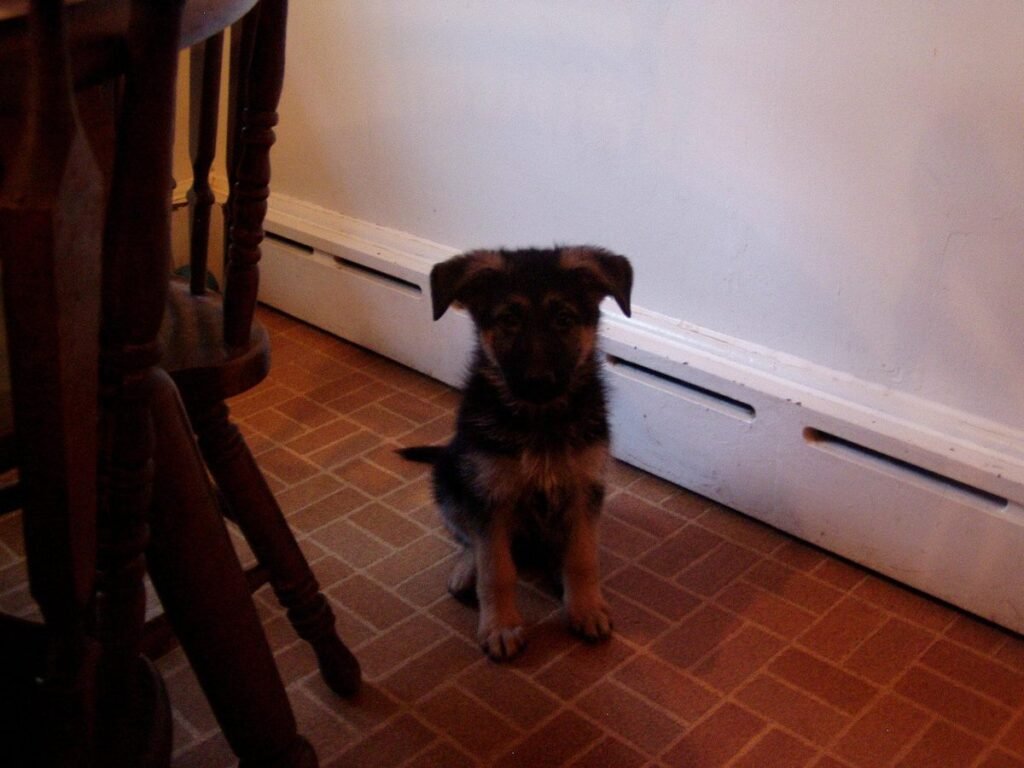
Few puppies change as dramatically as the German Shepherd. The floppy-eared eight-week-old who trips over his own paws becomes, in little more than a year, one of the most athletic and imposing of all breeds. Because German Shepherds grow large and grow fast, owners understandably watch the scales closely — wondering whether their puppy is too heavy, too light, or right where he should be.
This guide sets out typical German Shepherd puppy weights by age and sex, explains the breed’s characteristic growth pattern, and shows you how to assess your puppy’s condition properly. For an individual estimate at any point, you can also run your puppy’s numbers through our puppy weight calculator.
Typical German Shepherd Puppy Weights
German Shepherds show one of the clearest size differences between the sexes of any common breed, and it appears early. The ranges below reflect typical weights found in widely published breed growth references. They are a corridor for orientation, not a standard your puppy must match week by week.
| Age | Female — typical range | Male — typical range |
|---|---|---|
| 8 weeks | 5–7 kg | 6–8 kg |
| 12 weeks | 9–12 kg | 11–14 kg |
| 16 weeks | 13–16 kg | 15–19 kg |
| 5 months | 16–20 kg | 19–24 kg |
| 6 months | 18–23 kg | 22–27 kg |
| 9 months | 20–27 kg | 26–33 kg |
| 12 months | 21–30 kg | 28–37 kg |
| Adult | 22–32 kg | 30–40 kg |
Adult males typically finish between about 30 and 40 kg and adult females between about 22 and 32 kg — a spread wide enough that two healthy adults of the same sex can differ by 10 kg. Working lines tend to sit lower and leaner within the ranges; larger show lines toward the top. As with every breed, the trend matters more than any single reading, and our growth chart page is a useful place to record that trend.
The German Shepherd Growth Pattern
German Shepherd puppies gain weight at a remarkable rate in the first six months, often adding around two kilograms a month or more during the fastest phase, then taper gradually. Ears famously go through their own comedy routine — up, down, sideways — before standing permanently, usually by six or seven months, as the body invests in bone and cartilage.
Height comes before bulk. A seven- or eight-month-old Shepherd often has near-adult height on a narrow, adolescent frame, and strangers may call him skinny when he is in fact exactly on course. Males especially continue adding chest, muscle and substance into their second year; many owners are surprised how much a Shepherd “becomes” a dog between twelve and twenty months without gaining height at all. That long maturation is one reason feeding and exercise during growth deserve care.
Why Steady Growth Matters in This Breed
German Shepherds are among the breeds known to be predisposed to hip and elbow dysplasia — developmental joint conditions influenced by genetics and by how a puppy grows. No feeding plan can override genetics, and screening breeding dogs is the breeder’s contribution. The owner’s contribution is avoiding the two extremes: underfeeding that leaves a puppy poorly nourished, and overfeeding that drives growth faster than joints are built to handle.
In practice that means a complete large-breed puppy food, measured meals, a lean body condition, and sensible exercise — the often-quoted guideline of building up short, frequent play and walk sessions rather than long forced exercise, and avoiding repetitive jumping and stair-climbing marathons while bones are developing. Bigger is not better in a growing Shepherd; correct is better.
Assessing Condition: Hands Before Scales
A German Shepherd puppy in ideal condition has ribs that are easy to feel beneath a thin fat covering, a clear waist from above and the side, and a firm, athletic feel as the months pass. The breed’s double coat can hide a lot — a Shepherd can look substantial while being lean, or look sleek while carrying surplus fat — so hands-on checks beat visual guesses.
Weigh every one to two weeks up to six months, then monthly. If your puppy is under the range but gaining steadily, eating well and feels properly covered, you are probably looking at a puppy from smaller or working lines; mention it at routine vet visits and keep records. If weight gain stalls, appetite drops or ribs become prominent, book a check promptly — parasites and digestive issues are common, treatable causes in puppies. Many owners find that photographing the puppy monthly from the side and from above, alongside the weight record, makes gradual changes in condition much easier to spot than memory alone. Our puppy care guide covers these routine health habits in more detail.
Feeding a Growing German Shepherd
Feed a complete diet formulated for large-breed puppies; these control energy density and keep calcium in the range developing skeletons need — more calcium is not better and supplementing a complete food can unbalance it. Split food into three meals a day until about six months, then two. Use the packet’s guide for your puppy’s weight and age as a start, then fine-tune by body condition every fortnight, adjusting in small steps.
Shepherds are bright, intense puppies who earn a lot of training treats. Keep treats small, count them toward the day’s intake, and consider using part of the normal meal ration as training rewards. Our puppy nutrition guide explains how to read food labels and judge whether a diet suits a growing large breed.
Frequently Asked Questions
How much should a 4-month-old German Shepherd weigh?
Typically somewhere around 13 to 16 kg for females and 15 to 19 kg for males at 16 weeks. Puppies from smaller lines may sit below this and still be perfectly healthy.
When do German Shepherds stop growing?
Height is usually close to complete by 12 to 15 months, but weight and muscle keep developing until roughly 18 months, and many males continue filling out toward two years.
Is 35 kg a healthy weight for an adult male German Shepherd?
It can be — 35 kg sits within the typical adult male range of about 30 to 40 kg. Whether it is healthy for an individual dog depends on frame and body condition, not the number alone.
My Shepherd puppy looks skinny. Is he underweight?
Adolescent Shepherds often look leggy and narrow while remaining in ideal condition. Feel for the ribs: a light fat covering means he is fine. If bones feel sharp and weight is not increasing, ask your vet to check.
Do German Shepherds need special puppy food?
A complete food designed for large-breed puppies is a sensible choice because it controls calories and calcium for steady skeletal growth. Avoid adding calcium supplements to a complete diet.
Conclusion
A German Shepherd puppy’s weight makes sense only in context: sex, lines, frame and trend. Typical adults span 22 to 32 kg for females and 30 to 40 kg for males, reached through fast early growth and a long, slow fill-out. Feed for steady progress, keep your puppy lean, protect developing joints, and let hands-on condition checks have the final word over any chart — including this one.
Educational disclaimer: This guide presents typical published weight ranges for general education. They are not veterinary standards for an individual puppy, and German Shepherds can be healthy outside them. For advice about your puppy’s growth, weight or joints, consult a qualified veterinarian.
Last updated: November 2026