
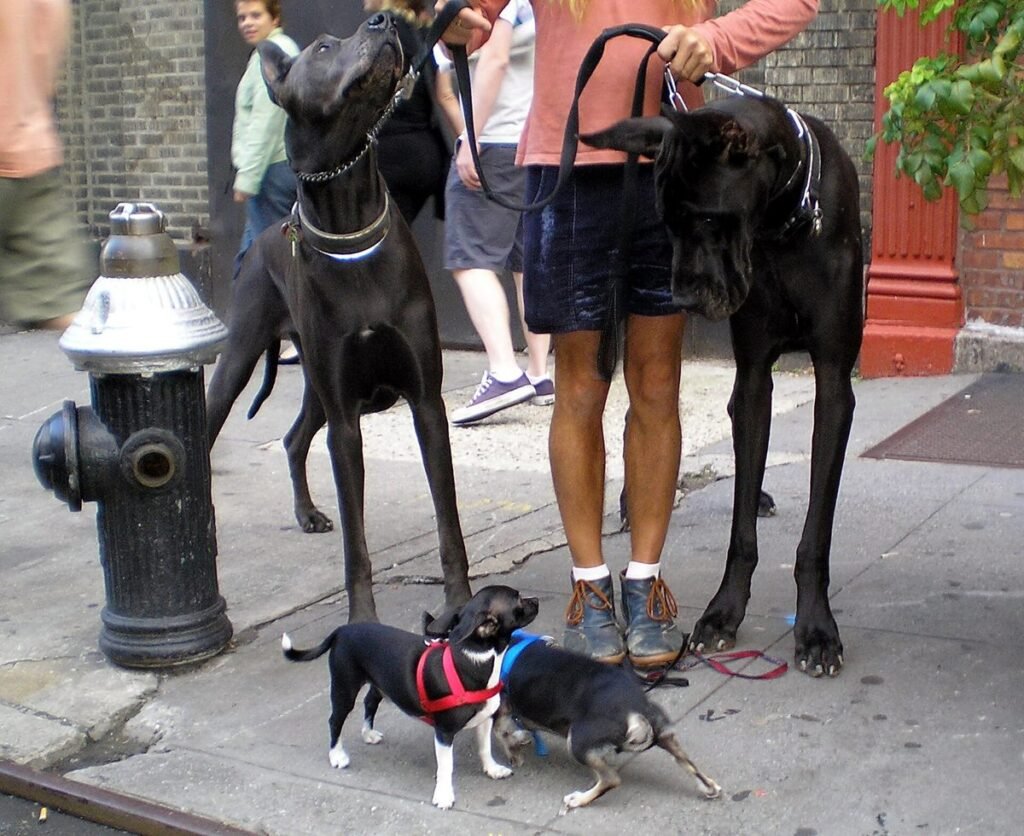
Put a twelve-week-old Chihuahua puppy next to a twelve-week-old Great Dane puppy and the difference is comic: one weighs about a kilogram, the other may weigh fifteen. But the most important differences between small and large breed puppies are not visible in a photo. They grow on entirely different schedules, mature at different ages, need differently formulated food, and face almost opposite health risks along the way. Understanding which track your puppy is on makes every other decision — feeding, exercise, training expectations, even when to switch to adult food — fall into place.
This guide compares the two growth patterns side by side, with medium breeds included where they helpfully sit in between. If you are not sure which category your mixed-breed puppy belongs to, the dog breed weight guide is the place to estimate their likely adult size first.
Two Very Different Clocks
Small breeds live puppyhood in a hurry. A toy or small dog — adult weight under about 10 kg — typically reaches half their adult weight by around three months, adult height by six to eight months, and full maturity by about a year, sometimes sooner. A large breed puppy — adult weight 25 to 40 kg — reaches the halfway mark later, keeps gaining height past their first birthday, and may not finish filling out until 18 months. Giant breeds, over about 40 kg as adults, stretch the process to two years or more.
Why? In broad terms, larger animals simply have further to travel, and their growth plates stay open longer. The result is that chronological age means different things in different sizes: a nine-month-old Papillon is essentially an adult, while a nine-month-old Labrador is a mid-adolescent with months of growing left. Our article on when puppies stop growing sets out the timelines in full.
Growth Rate: Percentages vs Kilograms
Measured proportionally, small puppies actually grow faster. A Chihuahua puppy may multiply their birth weight many times over in the first couple of months and can gain a noticeable percentage of their body weight every week. A Great Dane puppy gains far more in absolute terms — sometimes well over a kilogram a week — yet each kilogram is a smaller fraction of the 60-plus kilograms still to come.
This is why feeding mistakes show up differently. In a tiny puppy, a small measuring error is a large percentage of the ration, and missed meals can matter quickly: small puppies, especially toys, have limited reserves and can be prone to low blood sugar if they do not eat regularly in the early weeks. In a giant puppy, the risk runs the other way — generous portions and rich food can push growth faster than the skeleton is designed to develop, and the damage shows up in the joints rather than the waistline first.
Nutrition: Why Size-Specific Food Exists
Puppy foods formulated by size are not just marketing. Large and giant breed puppies need controlled energy and carefully balanced calcium and phosphorus, because excesses are linked with developmental orthopaedic problems. Their food is deliberately a little less energy-dense, encouraging the slow, steady growth their joints need. Small breed puppies need the opposite profile: energy-dense food in small kibble pieces, because tiny stomachs cannot hold much at once and fast metabolisms burn through it quickly.
Meal frequency differs too. Very young small puppies often do best on three or four small meals a day well into their first months, while large puppies typically move from three meals to two around six months. Medium breeds, as so often, land in the middle and thrive on standard puppy food with sensible portions. Our puppy nutrition guide explains how to choose and portion food for each size.
Exercise and Joints
Both sizes need play, exploration and short training sessions. The difference is impact and duration. Large and giant puppies have open growth plates for much longer, so repetitive high-impact exercise — long runs, constant jumping, endless stairs — is best limited until growth is complete. Short, frequent activity on forgiving surfaces suits them better.
Small puppies tire quickly and chill quickly, but they are not fragile ornaments: they benefit from the same varied, confidence-building experiences as any puppy, in smaller doses. Their exercise risk is less about joints and more about being underfoot, over-handled or allowed to jump from heights that are large relative to their size — off the back of a sofa is a long way down when you are 20 cm tall.
Development and Behaviour Timelines
Physical maturity is not the only clock running at different speeds. Small breeds often reach sexual maturity earlier — sometimes from around six months — while giant breeds may not mature until well into their second year. Behaviour follows a similar pattern in reverse of what many owners expect: the small dog who looks like an adult at eight months may still behave like one too, settling earlier, while the enormous eighteen-month-old “puppy” is mentally still an adolescent, with an adolescent’s judgement in a very large body.
Training windows, however, are shared. The early socialisation period matters just as much for a Mastiff as for a Maltese, and both need the same patient exposure to people, sounds and handling in their first months. Size changes the schedule of growth, not the foundations of a well-raised dog. Our puppy development guide covers those shared stages in detail.
Health Watchpoints by Size
Each track has its characteristic concerns. Small puppies: low blood sugar in the very young if meals are missed, dental crowding as adult teeth arrive in small jaws, and kneecap problems (luxating patella) in several toy breeds. Large and giant puppies: developmental joint conditions such as hip and elbow dysplasia, strain from excessively rapid growth, and in adulthood, a shorter average lifespan than small dogs — one of the genuine sadnesses of the giant breeds.
Neither list is a reason for anxiety; both are reasons to match care to size. Regular weigh-ins matter for both, too — on a kitchen scale for the toy puppy in the first weeks, on the vet’s floor scale for the giant — because in both cases the trend in the numbers is your earliest warning system.
Frequently Asked Questions
Do small breed puppies need different food from large breed puppies?
Yes, ideally. Small breed puppy food is more energy-dense with smaller kibble; large breed puppy food controls energy and calcium for steady skeletal growth. Each is designed for the risks of its size group.
Which grows faster, a small or a large puppy?
Proportionally, the small puppy — they complete growth in a fraction of the time. In kilograms per week, the large puppy gains far more. Both statements are true because they measure different things.
When should I switch my puppy to adult food?
Around maturity: roughly 9 to 12 months for small breeds, 12 to 14 for medium, and 14 to 24 for large and giant breeds. Confirm the timing with your vet for your individual dog.
My mixed-breed puppy’s adult size is unknown. Which rules apply?
Estimate adult size first — from the parents if known, or with a DNA test — then follow the guidance for that size category. When in doubt between two categories, the larger category’s slower-growth feeding approach is usually the safer default for a puppy who may grow big.
Can a large breed puppy eat small breed puppy food?
It is not a good idea as a main diet. The energy and mineral balance is wrong for controlled skeletal growth. If you run out, a day of another complete puppy food does no harm, but switch back promptly.
Conclusion
Small and large puppies are not scaled versions of each other; they are on different developmental programmes. Small breeds sprint to maturity within a year and need dense nutrition in small, frequent meals. Large breeds take up to two years, need controlled growth to protect their joints, and stay adolescents long after they look imposing. Identify your puppy’s track early, feed and exercise to match it, and you will avoid nearly all of the common growth mistakes owners make.
Educational disclaimer: This article offers general educational information about typical growth patterns by breed size. Individual puppies vary, and size categories are approximate. It is not veterinary advice; for guidance specific to your puppy’s growth or health, consult a qualified veterinarian.
Last updated: November 2026