
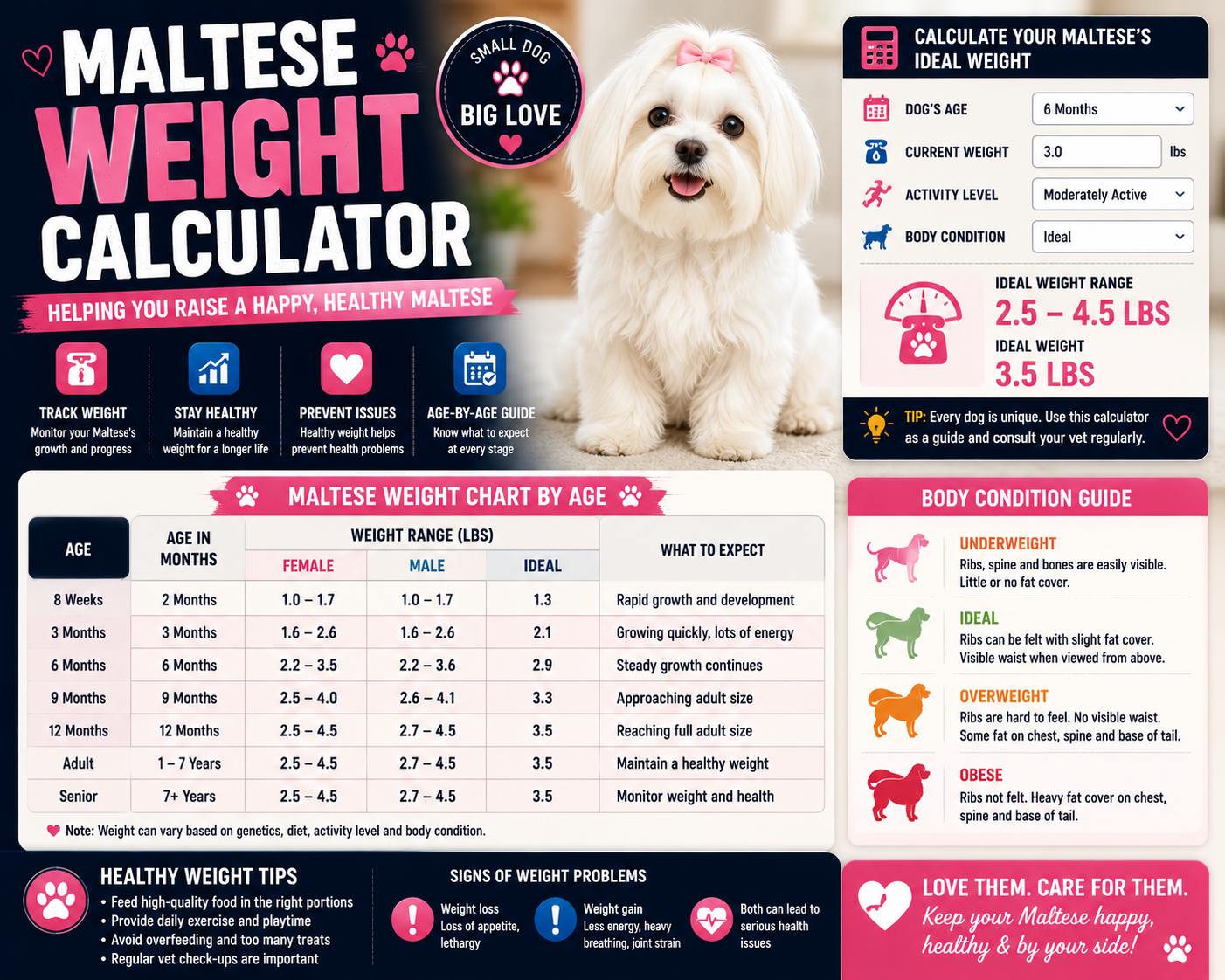
The Maltese Weight Calculator is an essential tool designed to help you track the healthy growth of your tiny toy-breed puppy. By using this calculator, you can easily estimate your puppy’s ideal adult weight based on their current milestone trajectory.
Monitoring a Maltese puppy’s weight during their early months is crucial for identifying developmental patterns and potential health issues early on. This tool uses breed-specific data to predict future growth trends accurately and efficiently.
If you want to keep your furry companion fit and thriving, this calculator serves as a perfect guide. It allows you to tailor their nutritional intake and meal portions according to their changing physical development needs.
Table of Contents
Maltese Weight & Growth Chart
Evaluating a toy breed requires tracking small increments. When tracking a Maltese, using a weekly chart helps monitor their progress. A typical birth weight can double rapidly during their initial growth spurt developmental milestones safely.
At 3 months, my puppy entered a stable weight range where changes slowed. Assessing their body condition score provides better insight than numbers, ensuring they do not lean into a small category too quickly.
By 6 months, achieving an adult weight estimate becomes much simpler for owners. If your dog falls under the average category, expect their final mass in pounds to settle near standard breed expectations very comfortably.
Maltese Growth Rate & Age To Reach Full Size
Observing a Maltese puppy development reveals a fascinating journey from birth. Their unique breed growth pattern dictating rapid changes demands consistent weight tracking to ensure they stay healthy during this initial vital growing phase safely.
When they enter a new home, their growth pace might shift slightly. A 3-month-old canine often exhibits fast growth, but they eventually settle down into a more stable and highly predictable growth trajectory over time.
Reaching full size happens faster than in larger breeds. Most small adults will completely finish growing around 9 months of age, leaving very little room for any additional unexpected weight gain later in their life.
Adult Size & Weight Standard
According to the official American Kennel Club guidelines, an adult Maltese must conform to a strict size standard. Judges prioritize a specific shoulder height to maintain the classic, elegant look of this historic breed properly.
The standard dictates an ideal weight of 4-6 lbs for these companions. While males can occasionally be slightly taller, the overall weight standard remains uniform across the board to preserve their delicate toy stature flawlessly.
For show-quality dogs, meeting the precise breed standard is essential. A subtle gender difference influences development, but keeping them within the ideal range ensures they represent the true essence of the breed standard very well.
Factors That Affect Growth
Proper nutrition is vital because a low-quality food filled with fillers can severely impact skeletal health. Avoiding overfeeding prevents unnecessary joint strain, ensuring your puppy builds a strong foundation for their lifelong growing journey successfully.
Internal health struggles like parasites or hidden congenital issues can cause stunted growth in toy companions. Seeking clinical guidance balances hormonal development, shielding vulnerable puppies from any permanent and severe development interruption very early on.
Providing a high-quality diet along with age-appropriate exercise supports healthy bone development. Whether raising males or females, monitoring these critical growth factors ensures they achieve their optimal adult size very safely, smoothly, and completely unharmed.
How Big Should A 6-Month-Old Maltese Be?
When observing 6-month-olds, handlers notice they approach their final physical boundaries. This period represents a key adult size milestone, signaling that the rapid, unpredictable phase of development is winding down into stable maturity very smoothly.
At 6 months, a toy puppy has often filled out significantly. Their typical weight range is tight, and many individuals are ready to finish growing structurally, shifting focus toward gaining lean muscle mass instead now.
The journey toward growth completion means changes become minimal. Their final adult height usually settles around 7-9 inches, reflecting the standard proportions expected of a healthy, beautifully proportioned mature toy companion in every single way.
How Much Bigger Will My Maltese Get?
Calculating the remaining growth requires analyzing several physical traits carefully. A knowledgeable breeder often looks at the animal’s current age alongside family history to provide an accurate, highly reliable developmental forecast for enthusiastic owners today.
Many owners assume that oversized paws guarantee a massive dog, but paw size is a loose growth indicator rather than an absolute rule. Instead, internal genetics dictate how large they truly become over long periods.
By 8 months, the skeletal frame stops elongating substantially. From this point forward, the process of filling out begins, helping the canine reach its final adult weight and a balanced body proportion very beautifully indeed.
How Do I Make Sure My Maltese Is Healthy?
Owning a purebred companion brings immense joy but requires vigilance regarding breed health risks. Scheduling regular routine checkups allows professionals to monitor development closely and detect subtle internal anomalies before they escalate into critical issues.
Many small breeds face metabolic vulnerabilities like acute low blood sugar, which demands careful dietary management. Early proactive health screening can identify underlying concerns, preserving your dog’s overall vitality and long-term well-being very effectively today.
Certain white-coated breeds are structurally susceptible to unique neurological issues like shaker syndrome. Regular, thorough veterinary exams ensure optimal neurological function is maintained, keeping your beloved toy companion active, safe, and happy through every season.
Key Takeaways
Familiarizing yourself with a growth chart helps map out your puppy’s physical milestones accurately. Tracking their initial puppy weight ensures they stay on a proper developmental trajectory toward a vibrant, active adulthood very successfully always.
Observing the natural growth tapering that occurs around 6-8 months prevents unnecessary dietary panic. While an adult Maltese remains remarkably petite, ensuring they meet basic AKC standards preserves structural integrity beautifully across their mature years.
Prioritizing consistent, professional veterinary care allows owners to catch any latent inherited health conditions early. Committing to proactive preventative care guarantees your toy companion enjoys a genuinely comfortable and long, healthy life filled with joy.
The Importance Of A Dog Weight Calculator
Utilizing a digital weight estimator empowers owners to navigate the complexities of early puppy growth with confidence. This innovative weight tool eliminates stressful guesswork, making physical development highly transparent and predictable for everyone involved today.
One of the primary calculator benefits is the capacity for precise nutrition planning from infancy. Knowing expected milestones assists in making informed decisions regarding daily caloric intake, preventing obesity or undernourishment in developing small puppies.
Additionally, accurate forecasting simplifies future gear sizing challenges for growing companions. Purchasing properly fitted collars or tailored harnesses becomes straightforward, ensuring safety during daily outdoor activities while optimizing overall physical comfort for your young dog.
Pairing The Calculator With Vet Checkups
Integrating a digital weight calculator into your regular routine enhances health monitoring. Combining technology with scheduled vet visits provides a comprehensive view of physical development, ensuring minor anomalies are detected quickly and addressed efficiently always.
Establishing a structured checkup schedule early helps safeguard your puppy’s well-being. Around 16 weeks, clinical evaluations ensure their growth aligns with computational models, blending scientific predictions with expert medical oversight perfectly and completely seamlessly.
As the dog approaches 1 year, their physical maturity stabilizes significantly. Maintaining this lifelong vet care routine guarantees that transitions from adolescent growth to mature maintenance occur safely and without hidden health issues developing later.
How Much Dog Food Should I Feed My Maltese?
Determining the correct feeding amount depends directly on your canine’s unique current weight. Puppies require dense fuel to grow, making a balanced feeding schedule essential to support their rapid metabolic needs very healthily and safely.
An individual’s daily calories must reflect their lifestyle and actual activity level. Active companions burn energy quickly, while older, sedentary adult dogs need strict portions to avoid becoming an unfortunate, sluggish overweight dog over time.
Implementing frequent meals helps stabilize delicate blood sugar levels in toy puppies. As they reach maturity, tracking their structural body condition score ensures successful long-term weight management throughout their active adult lives very smoothly always.
What Dog Food Should I Feed My Maltese To Keep Them Healthy?
Evaluating the overall diet quality is paramount for protecting a toy dog’s sensitive system. Foods rich in premium protein sustain vital muscle health, offering structural support for daily activities and boundless play every single day.
Incorporating clean healthy fats meets their unique energy needs without relying on heavy grains. A carefully constructed low-carbohydrate diet prevents sudden spikes in glucose, safeguarding their long-term metabolic health effectively and completely all year round.
Achieving a proper nutrition balance mitigates systemic inflammation within fragile joints. Tailoring food choices to your dog’s age ensures optimal organ health, allowing your white companion to thrive beautifully for many years ahead safely now.
Other Names For Maltese
Exploring historical documentation reveals that this elegant toy canine has possessed more than one breed name. Over centuries, coastal communities developed unique labels to identify these iconic white lapdogs quite accurately and very clearly always.
In European registries, the term Bichon Maltese appears frequently across classic genealogical records. This beautiful designation reflects their deep Mediterranean roots, highlighting a long ancestry tied directly to ancient maritime trade routes very clearly and elegantly.
While their common name remains universally recognized today, enthusiasts often embrace a specific alternate name in regional clubs. Understanding these terminologies enriches our collective appreciation for this historic, beloved purebred companion beautifully and thoroughly now.
Final Thoughts
Maintaining an ideal weight is vital for ensuring your Maltese lives a long, happy, and highly active life. Keeping them within a healthy weight range helps protect their fragile joints and prevents serious conditions like canine obesity.
While this tracking tool provides highly reliable estimates, every puppy develops uniquely based on their specific genetics, diet, and lifestyle. Therefore, it is always recommended to pair these digital insights with regular checkups from your veterinarian.
We hope this specialized weight calculator simplifies your pet parenting journey and gives you peace of mind as your dog matures. Cherish every moment of their puppyhood while ensuring they stay on the right path to optimal health.
Can A Puppy End Up Bigger Than Its Parents Even If Both Parents Are Smaller?
Canine inheritance functions in highly complex ways, meaning a young dog’s final adult size cannot be predicted entirely by looking at immediate parents. Hidden traits can bypass generations before surfacing unexpectedly in their physical development.
A Breeder Promised An Exact Adult Weight, But The Puppy Is Already Exceeding Pace — What Now?
Predicting an exact adult weight with total absolute precision is nearly impossible because nature involves biological variability. Even highly experienced, reputable breeders offer estimates based on averages rather than guaranteed certainties across the board entirely.
Could A 5-Month-Old Puppy’s Discomfort Be Growing Pains?
While severe skeletal shifting is traditionally associated with large breeds, smaller companions can experience brief periods of physical soreness. Recognizing subtle puppy discomfort allows owners to respond with gentle care and soothing attention immediately always.
How Accurate Are Puppy Weight Calculators?
Evaluating digital tools requires understanding that calculator accuracy depends on standardized breed data. These algorithms process millions of developmental milestones to generate realistic projections for eager, enthusiastic pet owners everywhere across the globe very quickly.
How Often Should I Weigh My Puppy Using A Size Calculator?
Managing your companion’s development involves establishing an optimal weighing frequency early on. During the initial fast-growing period, tracking mass regularly helps capture critical milestones before they pass unnoticed by busy owners across the world today.
Related Articles: