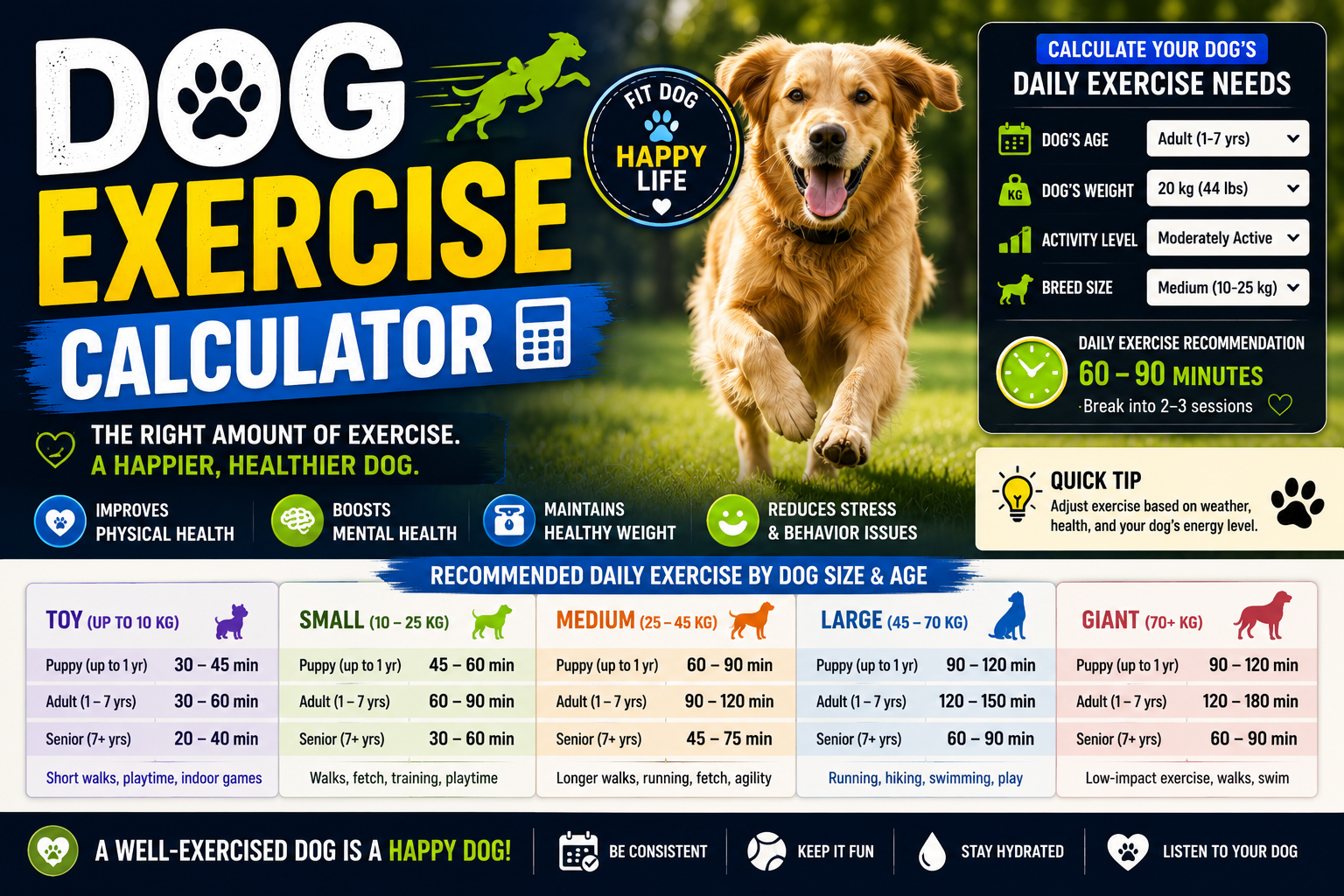
A Dog Exercise Calculator is an innovative digital tool designed to help pet parents determine the ideal amount of daily physical activity their furry friends need. Since every canine is completely unique, this tool eliminates the guesswork by customizing recommendations rather than relying on a risky, one-size-fits-all approach.
By analyzing key variables such as your dog’s breed, age, weight, and current health status, the calculator generates a tailored daily activity target. Whether you have a high-octane Border Collie puppy or a relaxed senior Chihuahua, it provides precise minute-by-minute goals for walks and active playtime.
Utilizing this tool is a proactive step toward preventing canine obesity and behavioral issues caused by pent-up energy or boredom. Ultimately, it empowers you to safely maintain your pup’s peak physical health, ensuring they live a happy, active, and well-balanced life by your side.
Table of Contents
Types Of Exercise By Intensity
Evaluating canine exertion requires observing subtle shifts rather than simple exhaustion. When a dog shows extreme fatigue, immediate hydration becomes vital. As a practitioner, I look beyond obvious panting to assess underlying physiological stress accurately.
Altered canine behavior often signals an immediate need to consult a medical professional. Tracking these physical signs ensures safety before altering any fitness regimen. A certified vet can analyze if unexpected lethargy stems from overexertion.
Practitioners must carefully monitor every movement session to prevent injury. Initiating a slow transition between various fitness levels preserves joint health. Establishing a balanced routine requires understanding specific physical capabilities over unique chronological age constraints.
Light Activity
Focusing purely on physical exertion misses the profound neurological benefits of calm movement. Gentle, low impact movement patterns stabilize anxious temperaments effectively. Incorporating structured stillness helps build focus far better than constant frantic running could.
Providing targeted mental stimulation satisfies complex cognitive canine needs without causing physical exhaustion. I often recommend teaching tricks because it fosters deep psychological engagement. This cerebral approach modifies canine behavior quietly, keeping animals completely satisfied.
When weather prevents outdoor exploration, practicing specific indoor games works wonderfully. Engaging an aging animal through leisurely walking down quiet corridors provides excellent joint lubrication. This subtle rehabilitation strategy maintains essential mobility quite beautifully.
Moderate Activity
Achieving physiological equilibrium requires a deliberate step above casual movement. Consistent moderate activity optimizes cardiovascular function without straining skeletal structures unnecessarily. Practitioners balance these specific sessions to build cardiovascular endurance sustainably over extended time frames.
I routinely recommend introducing structured brisk walks across uniform, predictable surfaces. Utilizing flat terrain minimizes unexpected joint twisting while maintaining an elevated heart rate that promotes steady metabolic conditioning completely without extreme exhaustion health risks.
Transitioning your routine outside introduces novel sensory inputs that enrich mental health. Immersive hiking on managed paths challenges proprioception naturally, offering excellent musculature conditioning far superior to repetitive indoor treadmill fitness tasks every single day.
Intense Activity
Athletic canines thrive when pushed toward peak conditioning thresholds. Incorporating structured intense activity demands rapid muscular recruitment and supreme focus, transforming raw physical energy into refined athletic prowess through demanding physical fitness training protocols successfully.
From an analytical perspective, agility training provides the ultimate combination of mental sharpness and rapid acceleration. Allowing safe, off leash movement empowers animals to navigate complex obstacles using their natural structural biomechanical movement instincts fully.
Socially dynamic environments spark intense physiological outputs. Controlled playing with other dogs induces unpredictable directional changes and high speed bursts, which build exceptional cardiac capacity provided the animals possess adequate foundational muscular core strength reservoirs.
How The Calculator Works & Use Cases
Formulating a precise exercise plan requires reversing traditional canine fitness logic entirely. Instead of guessing exhaustion levels, we measure specific calorie burn metrics against metabolic baselines to establish a highly sustainable physical performance baseline protocol.
Successful canine weight management hinges upon modifying variables systematically rather than drastically. By embedding precise algorithmic calculations into the daily routine, practitioners can accurately balance metabolic input against physical energy outputs completely without dangerous guesswork.
To calculate optimal longevity paths, we must look at individual biochemical needs first. Modern digital applications translate movement duration directly into consumed calories, allowing handlers to adjust dietary allocations with extreme scientific performance care precision.
Calculator Inputs / How It’s Used
Inputting a specific breed size begins the baseline customization process for any canine. This baseline represents an essential mathematical foundation before considering external lifestyle elements that dramatically reshape overall somatic needs over long operational durations.
Evaluating an inherent energy level helps fine tune daily algorithmic recommendations correctly. Every chronological life stage demands completely different metabolic calibrations to ensure optimal structural preservation and guard against physiological overexertion during intense fitness training.
Finally, transforming data into a practical exercise routine requires constant real world observation. Handlers must adjust calculated suggestions continuously, matching actual physical outputs against individual stamina baselines to achieve a balanced canine somatic lifestyle safely.
Final Thoughts
A dog exercise calculator takes the guesswork out of daily routines by tailoring activity to your pup’s unique age, weight, and breed. It provides a reliable baseline to ensure they get enough movement to stay healthy without risking physical exhaustion.
Finding that perfect sweet spot prevents both frustrating behavioral issues rooted in boredom and joint strain from over-exercising. It bridges the gap between guessing and knowing exactly what your furry best friend needs to thrive every single day.
Ultimately, while digital tools offer an excellent roadmap, they work best when paired with your own daily observations. Use the calculator as your primary guide, tune into your dog’s natural energy cues, and always consult your vet for a fully customized wellness plan.
What is a dog exercise calculator and why is it important?
A dog exercise calculator determines the ideal daily activity your pet needs based on their unique breed, age, and weight. Utilizing this tool helps prevent both under-exercising and over-exhaustion, ensuring your dog stays healthy and physically balanced.
Do puppies and adult dogs require the same amount of exercise?
No, puppies have developing joints and require shorter, low-impact play sessions scattered throughout the day rather than long, strenuous walks. Adult dogs, depending on their breed’s natural stamina, can easily handle much more sustained and intense daily workouts.
Can I use this exercise calculator for any dog breed?
Yes, this tool is designed to accommodate all dog breeds, ranging from tiny Chihuahuas to giant Saint Bernards. It calculates recommendations by factoring in each breed’s specific energy levels and physical limits to give you highly accurate results.
What happens if my dog gets too much or too little exercise?
Too little exercise can lead to obesity, boredom, and destructive behaviors like chewing or barking. Conversely, over-exercising your dog risks causing severe muscle strain, joint damage, and physical exhaustion, especially in growing pups or senior dogs.
Should weather conditions affect my dog’s daily exercise routine?
Absolutely, extreme heat or freezing temperatures mean you should limit outdoor activities to protect your dog from heatstroke or frostbite. On days with harsh weather, you can easily substitute long outdoor walks with indoor games or mental stimulation puzzles.
Related Articles:
French Bulldog Weight Chart Calculator
Alaskan Klee Kai Weight & Growth Chart Calculator
Yorkie Growth Chart & Calculator | Yorkshire Terrier