
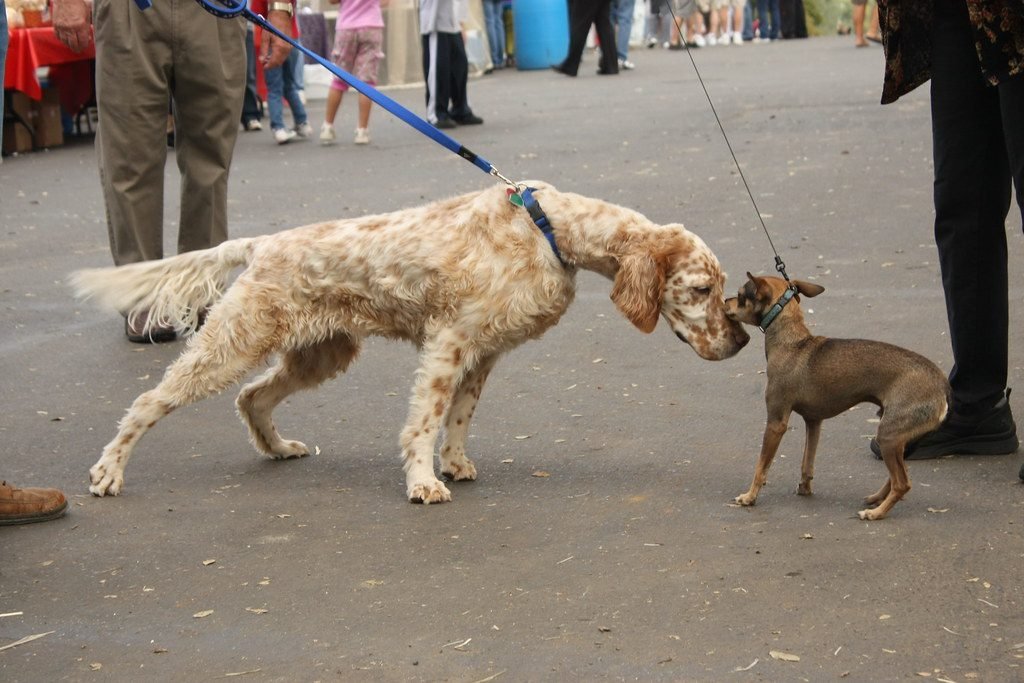
When you bring home an eight-week-old puppy, it is hard not to wonder how big those little paws will one day be. Will your puppy stay lap-sized, become a sturdy medium dog, or outgrow the bed you just bought? A calculator gives a useful estimate, but it works from averages. Adult size is shaped by several factors — some fixed from conception, others influenced by care in the first year or two.
Understanding them helps you focus on what you can control: nutrition, veterinary care, and healthy habits.
Disclaimer: Adult size prediction is an estimate based on breed averages, parent size, and typical growth patterns. It is not a guarantee and is not veterinary advice. Your veterinarian is the best person to assess your puppy’s growth.
Genetics and Breed: The Dominant Factor
More than anything else, genetics determines how big your puppy will grow. Breed — or the mix of breeds in its background — sets the blueprint for height, frame, and adult weight. That is why a well-fed Chihuahua puppy and a well-fed Great Dane puppy will never end up near the same size.
For purebred puppies, breed averages give a fairly reliable range — see our dog breed weight guide. Mixed-breed puppies are less predictable: with one small parent and one large parent, a puppy might land between the two, lean toward one side, or occasionally surprise you. Knowing the breeds in the mix helps, but still gives no exact weight — see our guide to mixed breed puppy growth. Think of genetics as setting the ceiling and the floor: most healthy puppies finish inside that inherited range, whatever you feed them.
The Parents’ Sizes: What to Look At When You Meet Them
If genetics is the blueprint, the parents are the clearest preview of the finished building. A puppy inherits size genes from both parents, so seeing both gives a much better picture than seeing one alone. Look beyond weight alone:
- Height at the shoulder — often more telling than weight, because a dog can be underweight or overweight for its frame.
- Overall build — lean and fine-boned, or broad and heavily built? Puppies often inherit a similar frame.
- Condition — a mother recovering from nursing may look lighter than normal, so ask her pre-litter weight.
- Age — a young parent may not have finished growing, especially in large breeds.
As a rough guide, many puppies finish near the average of their two parents, but littermates can still vary, because each inherits different genes. If you cannot meet the parents, age, weight, breed background, and growth over several weeks still give a calculator and your vet plenty to work with.
Sex: Males Are Often Slightly Larger
In most breeds, males finish slightly taller and heavier than females from the same litter. The difference is usually modest — a few pounds in smaller breeds, more in large breeds — but consistent enough that most growth charts ask for your puppy’s sex.
This is a tendency, not a certainty: a large female from big parents will outgrow a small male from smaller parents. Sex adjusts the estimate within the genetic range; it does not override it — which is why our puppy weight calculator asks for it.
Nutrition During Growth: Reaching Potential, Not Exceeding It
Nutrition is the factor owners ask about most, and the most misunderstood. It matters enormously for health, but works within the limits genetics sets.
Undernutrition can prevent a puppy reaching its full potential. A puppy that lacks enough calories, protein, or essential nutrients over a sustained period — through neglect, illness, or competition with littermates — may grow more slowly and, in serious cases, finish smaller. Rescue puppies who had a rough start sometimes stay smaller for this reason.
Overfeeding, however, does not make a puppy taller or give it a larger frame. Extra calories are stored mainly as fat: an overfed puppy becomes rounder, not bigger-structured. Excess weight also strains developing joints, a particular concern for large and giant breeds, for whom many vets recommend a large-breed puppy food for steady, not rapid, growth.
Feed a complete, balanced puppy food and adjust by body condition: you should feel the ribs easily under a thin layer of fat, but not see them prominently.
Neutering and Spaying Timing: A Modest, Debated Effect
You may have heard that spaying or neutering early makes a puppy grow taller. There is some biology behind it: sex hormones help signal the growth plates in the long bones to close. If a dog is neutered or spayed before they close, they may stay open a little longer, resulting in slightly longer bones and a marginally taller dog.
In practice, any effect is generally described as modest, and findings are not identical across breeds and sizes. Timing also interacts with other health considerations, and professionals continue to discuss ideal timing. Discuss it with your veterinarian, and do not choose a surgery date based on size alone — any difference is small compared with the wider health picture.
Health During Puppyhood: Why Vet Care Matters
A puppy’s body puts a lot of energy into growing, and when illness diverts that energy, growth can slow. Intestinal parasites such as roundworms and hookworms are common in puppies and compete for nutrients, which is why routine deworming is standard early care. Longer illnesses, digestive problems, or untreated infections can also temporarily slow weight gain.
Puppies often catch up once the problem is treated, especially when caught early. Regular first-year check-ups — vaccinations, parasite control, and weight checks — help spot problems early. If growth flattens or appetite drops, call the vet rather than simply feeding more.
Litter Size and Birth Weight: A Smaller Start Is Not a Life Sentence
Puppies from large litters often start smaller: with more littermates sharing space before birth and competing for milk afterwards, early weights tend to be lower than in a small litter. A smaller start does not always mean a smaller adult, though. With good nutrition and care, such a puppy frequently catches up and finishes within the normal range for its breed and parents — the tiniest newborn often becomes a perfectly average adult.
The smallest puppy does deserve extra monitoring, though, because occasionally it is small due to a health issue, not just competition. Regular weigh-ins help tell a small-but-thriving puppy from one who needs support.
Growth Rate vs. Final Size: Fast Early Growth Does Not Raise the Ceiling
Puppies do not grow at the same pace, and they do not finish at the same age:
| Size category | Typical adult weight | Growth mostly complete |
|---|---|---|
| Toy and small | Up to about 20 lb (9 kg) | Around 6–8 months |
| Medium | About 20–50 lb (9–23 kg) | Around 12 months |
| Large | About 50–90 lb (23–41 kg) | Around 12–15 months |
| Giant | Over about 90 lb (41 kg) | Up to 18–24 months |
Within those timeframes, some puppies grow in spurts. A puppy that shoots up at four months is not destined to be oversized; it may simply slow down sooner. A slow starter may grow for longer and finish at a similar size. Growth rate describes the journey, not the destination — the genetic ceiling stays the same.
Environment and Exercise: Supportive, Not Size-Changing
Everyday life plays a supporting role. Normal, age-appropriate exercise — play, short walks, and exploring — supports healthy muscles, bones, and coordination.
Ordinary exercise does not meaningfully change adult height or frame. You cannot exercise a puppy into a larger dog, and normal play will not stunt growth. Owners of large and giant breeds are usually advised to avoid forced, repetitive high-impact exercise, such as long runs, while growth plates are open — because of joint strain, not final size. Environment matters most through the basics: a safe home, consistent feeding, clean water, and plenty of sleep — puppies do much of their growing while they rest.
Frequently Asked Questions
Can I tell my puppy’s adult size from its paw size?
Only very roughly. Large paws often mean more growing to do, but paw size is imprecise. Breed, parent size, age, and weight trends are far more reliable.
Will the smallest puppy in the litter always be the smallest adult?
No. Birth weight is a weak predictor of adult size. Many smallest puppies catch up once eating well and finish within the normal range for their breed and parents.
Does feeding my puppy more make it grow bigger?
Not in height or frame. Adequate nutrition lets a puppy reach its genetic potential, but extra food is stored mainly as fat and strains developing joints.
Does spaying or neutering change how big my dog will get?
It may have a small effect on height in some dogs, because sex hormones are involved in growth plate closure. Any effect is generally modest and varies, so discuss timing with your veterinarian.
When will my puppy stop growing?
Toy and small breeds are mostly finished by around 6–8 months, medium breeds by about 12 months, large breeds by 12–15 months, and giant breeds may keep filling out until 18–24 months.
Conclusion
No single factor decides adult size. Genetics and breed set the range, the parents show where in that range your puppy may land, and sex nudges the estimate slightly. Nutrition, health care, and environment then determine whether your puppy reaches its healthy potential within that range. Focus on what you control, and your puppy will grow into the dog it was meant to be, whatever size that is.
Last updated: November 2026