
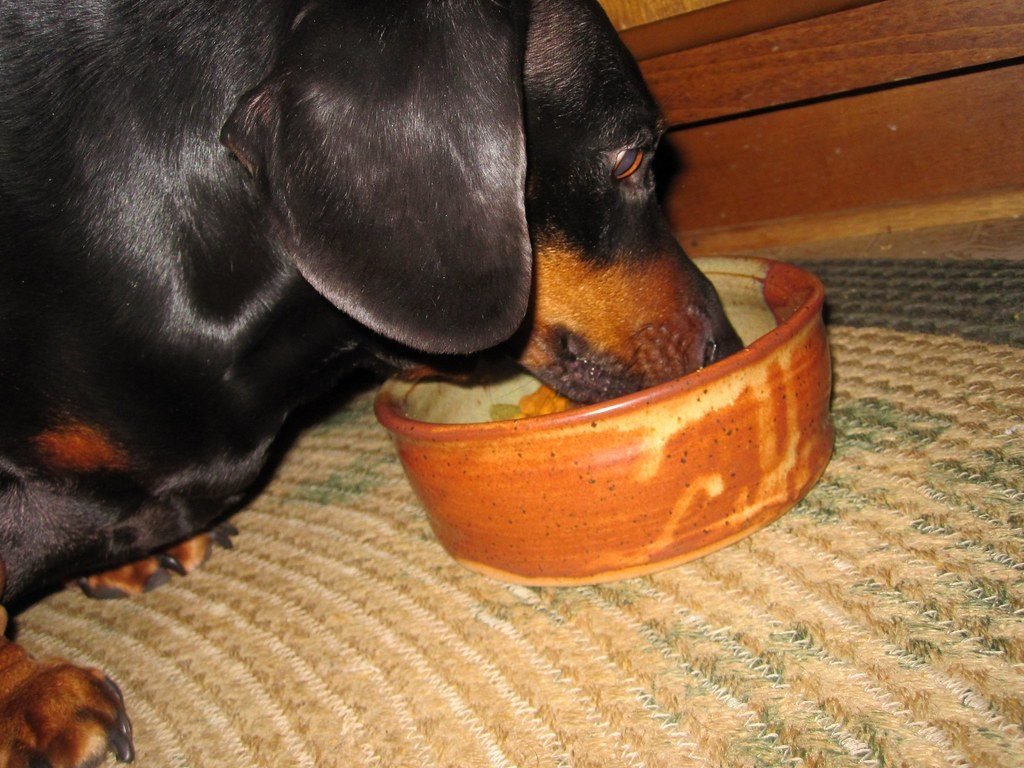
Most puppy feeding mistakes come from kindness, not carelessness. Owners add a little extra because their puppy looks hopeful, leave food down so the puppy never goes hungry, or share a bite from their own plate as a way of bonding. The intentions are good, but puppies grow fast, and small daily habits add up — to extra weight, an upset stomach, fussy eating, or growth faster than a young skeleton can comfortably handle.
Every mistake below is common, understandable, and fixable. For each one, we explain why it happens, why it matters, and what to do instead.
1. Overfeeding and Believing in “Puppy Fat”
Why it happens: Round puppies look adorable, and many people assume they simply grow out of their roundness. It is also easy to top up the bowl when a puppy finishes quickly and looks for more.
Why it matters: A little roundness in a very young puppy is normal, but persistent overfeeding is not something puppies reliably grow out of. Excess weight loads developing joints and bones, and overeating habits often continue into adulthood.
What to do instead: Judge by body condition, not appetite. You should feel the ribs easily under a thin fat covering and see a waist from above. Weigh your puppy regularly against a puppy growth chart for their breed size, and trim portions slightly if weight climbs too fast.
2. Free-Feeding Instead of Scheduled Meals
Why it happens: Leaving a full bowl down all day feels convenient and reassuring, especially in a busy household.
Why it matters: You cannot tell how much your puppy eats, or spot an appetite drop quickly — often an early sign of illness. Free-feeding also makes house-training harder, because predictable meals lead to predictable toilet times.
What to do instead: Feed measured meals: typically four a day at 8 to 12 weeks, three from 3 to 6 months, and two from around 6 to 12 months. Put the bowl down for 15 to 20 minutes, then remove leftovers.
3. Feeding Adult Food Too Early
Why it happens: Adult food may already be in the house for another dog, is often cheaper, and a large puppy can look fully grown months before they are.
Why it matters: Adult food is formulated for maintenance, not growth. Switching too soon matters most for large and giant breeds, which keep growing well past their first birthday. Our puppy nutrition guide for beginners explains what growing puppies specifically need.
What to do instead: Feed a complete food for growth until maturity: roughly 9 to 12 months for small breeds, 12 to 14 months for medium breeds, and 18 to 24 months for large and giant breeds. Ask your veterinarian if you are unsure.
4. Too Many Treats and Table Scraps
Why it happens: Treats are how we train and bond, and a small scrap feels harmless — especially when everyone in the family offers one.
Why it matters: Uncounted treats can become a large share of a small puppy’s intake, unbalancing a diet that should come mainly from complete food. Rich scraps can also upset the stomach. As a general guide, treats should stay under roughly 10% of daily calories.
What to do instead: Set a daily treat allowance, use pea-sized pieces for training, count treats within the day’s food, and agree that no one feeds from the table. Using part of the normal kibble ration as rewards helps, as our puppy nutrition basics explain.
5. Following the Bag’s Guide Without Adjusting
Why it happens: The printed guide looks official and precise, so it is tempting to treat it as an exact prescription.
Why it matters: Guides are averages. Breed, metabolism, activity, and growth rate mean your puppy may need noticeably more or less. Following the guide blindly for months can slowly produce an over- or underweight puppy.
What to do instead: Use the guide as a starting point, then adjust by body condition and regular weigh-ins. A puppy weight calculator can help you understand expected adult size and growth, making adjustments easier to judge. Change amounts in small steps and reassess every couple of weeks.
6. Changing Food Suddenly
Why it happens: A bag runs out, a new food is on offer, or a puppy seems bored, so the new food goes straight in at full strength.
Why it matters: The digestive system adapts to familiar food. An abrupt change commonly causes loose stools or refusal, and you cannot tell whether the food disagrees with your puppy or the change was simply too fast.
What to do instead: Transition over about seven days:
- Days 1–2: three-quarters old food, one-quarter new
- Days 3–4: half old, half new
- Days 5–6: one-quarter old, three-quarters new
- Day 7 onwards: all new food
If stools loosen, stay at the current ratio for an extra day or two.
7. Adding Calcium or Supplements “Just in Case”
Why it happens: Owners of large-breed puppies want strong bones, and supplement marketing suggests more must be better.
Why it matters: A complete puppy food already contains calcium in careful balance with phosphorus. Extra calcium — from supplements, bone meal, or lots of dairy — upsets that balance and, in large-breed puppies, can interfere with normal skeletal development.
What to do instead: Skip supplements if your puppy eats a complete food for growth — a large-breed formula where appropriate — unless your veterinarian recommends one for a specific reason.
8. Sharing Unsafe Human Foods
Why it happens: Families share food, and many owners do not know which everyday foods are dangerous for dogs.
Why it matters: Some human foods are toxic to dogs, including:
- Chocolate
- Grapes, raisins, and currants
- Onions, garlic, and chives, including powders in cooked food
- Xylitol (birch sugar), in some sugar-free gum, sweets, and peanut butters
- Cooked bones, which can splinter
What to do instead: Keep these foods out of reach, check labels before sharing anything — especially peanut butter — and make sure visitors know the rule. If your puppy eats something unsafe, contact your veterinarian promptly.
9. Inconsistent Feeding Times and Places
Why it happens: Busy schedules and several family members feeding in different places make routines drift.
Why it matters: Puppies thrive on predictability. Irregular feeding complicates house-training, can encourage anxious or demanding behaviour around food, and risks double-feeding when two people each think the other has not fed the puppy.
What to do instead: Agree on set times, one feeding spot, and one simple record — a fridge chart or shared note — showing when the puppy was fed and how much.
10. Measuring by Eye
Why it happens: Scooping by eye is fast, and a handful feels consistent. In practice, “one scoop” varies a lot between days and between people.
Why it matters: Small overestimates add up. For a small puppy whose whole daily ration may be one cup, an extra heaped scoop at each meal is a large percentage increase — a common reason puppies gain weight while owners feel portions never changed.
What to do instead: Weigh food on a kitchen scale, or use the same measuring cup filled the same way each time. A useful trick is to weigh the whole day’s food into a container each morning and serve meals and training treats from it.
| Mistake | Simple fix |
|---|---|
| Free-feeding | Timed, measured meals; bowl up after 15–20 minutes |
| Guessing portions | Kitchen scale or consistent measuring cup |
| Sudden food change | Gradual transition over about 7 days |
| Uncounted treats | Keep treats under roughly 10% of daily calories |
| Extra calcium | Rely on complete puppy food; supplement only on veterinary advice |
Please note: Feeding amounts, frequencies, and timings in this article are general educational guidance, not a veterinary prescription. Individual needs vary by breed, size, activity, health, and body condition, so check with your veterinarian if you are unsure, or if appetite, weight, or stools change noticeably.
Frequently Asked Questions
My puppy still acts hungry after meals. Am I underfeeding?
Not necessarily. Many puppies will happily eat far more than they need. Check body condition and growth instead of appetite: if your puppy is lean, growing steadily, and your veterinarian is happy with their weight, the amount is likely right. A slow-feeder bowl can make meals last longer.
Is it okay if different family members feed the puppy?
Yes, if everyone follows the same portions, times, and rules, and treats come from one daily allowance. A feeding chart prevents double meals.
How quickly will I see a difference after fixing a mistake?
Digestive upset from a sudden change usually settles within a few days of slowing the transition. Judge weight changes over two to three weeks of regular weigh-ins, not day by day.
My puppy is fussy. Should I keep changing foods?
Frequent switching usually makes fussiness worse, because puppies learn that refusing food produces something new. Offer food at set times and lift leftovers after 15 to 20 minutes. If fussiness is new, persistent, or paired with other changes, see your veterinarian.
Conclusion
None of these mistakes makes you a bad owner — almost every puppy owner makes some of them, usually out of love. The fixes are ordinary: scheduled, measured meals; a complete puppy food fed until true maturity; gradual food changes; modest, counted treats; and no well-meant supplements on top of a balanced diet. Pick the habit that sounds most like your household, fix that first, and build from there.
Last updated: November 2026